
Gili Hoxhaj
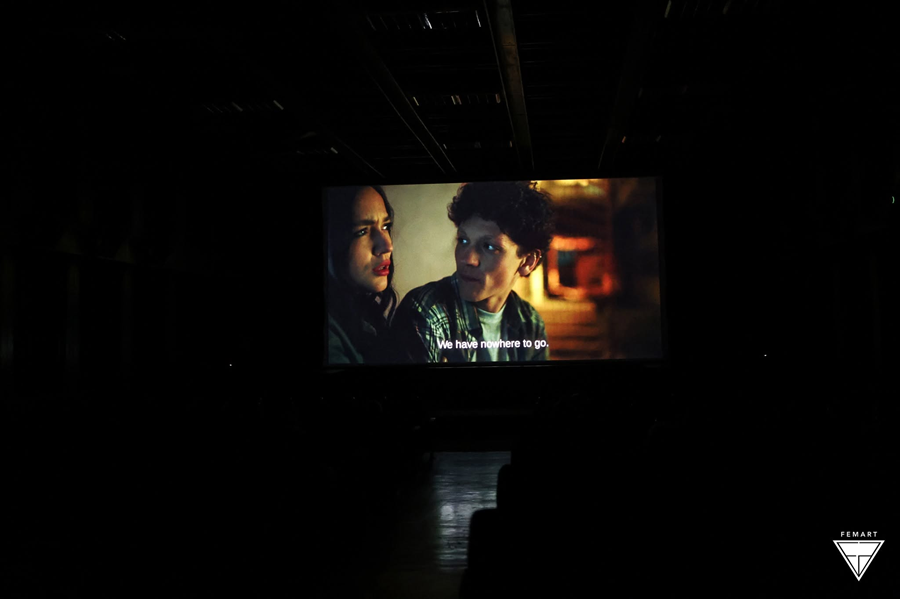
Entering the “Armata” cinema felt like stepping back in time – to the past and its memories, into the life of a 17-year-old girl whose path grows increasingly uncertain. “Era,” written and directed by Parta Kelmendi, was screened at FemArt, the largest feminist festival in the Balkans. With this film, the festival once again touches on the realities of women across time, exploring identity, courage, dreams and freedom in difficult times.
The film takes us through a childhood spent away from her father, adolescence separated from love, broken dreams, a mother distanced from her children, secret schooling and a life filled with painful memories. Yet despite the fear, pressure and hardship, life continued with hope. Families still gathered around the table for lunch.
Children were born, and young people found ways to fall in love. They saw life through darker eyes, while their parents stayed strong, trying to give them courage. Solidarity was everywhere. Families were closer than ever.
Era is the central character, forced to leave life in Prishtina when her father loses his job and the family can no longer afford their apartment. The village becomes their only option. Era no longer sees a future for herself in Kosovo. She rebels. She searches for a way out. She finds the courage to say “no” to a life that denies her freedom and dreams. Her boyfriend abandons her, choosing another path within the wider solidarity among Albanians.
In the village, Era encounters danger for the first time when she is struck by a Serbian police officer. Their lives become confined to the courtyard.
Excluded from cafés, schools and the streets, they no longer feel safe even at home. Young people long to laugh freely. Their parents feel guilty, unsure of what else they can offer them. They have forgotten themselves along the way.
Era now spends much of her time with her grandmother, who repeatedly reminds her of marriage. Through this, the film reveals the reality of a young woman and the expectations placed upon her within the family. It also portrays her mother’s dream of becoming a fashion designer, her father’s return to work as a waiter, and her uncle, who leaves behind two children to take the illegal route to Germany, while his wife remains behind with her husband’s family—utterly alone.
The film speaks of the loss of personal freedom, dreams, Serbian repression, violence, insecurity and memories that continue to live on in Kosovo.
Zana Berisha plays Era. The cast also includes Alban Ukaj, Irena Aliu, Armend Smajli, May-Linda Kosumoviq, Melihate Qena, Kumrije Hoxha and Lum Veseli. Director Parta Kelmendi has explained that the film grew out of a reflection on her own life in the 1990s, when she was a teenager.
“The film came as a reflection of my life in the ’90s, when I was a teenager. It began simply from a need to reflect, when I started reading my diaries from that time. Then I felt the need to unfold this story. The film contains my reality, the reality of society, family and people we knew. So, although the film is fiction, it is based on different real events,” Kelmendi said.
“Era” had its world premiere at the Brooklyn Film Festival in 2025, where it received the Best Actor Female award for the leading actress. The film was later presented at other festivals and, according to Kelmendi, has continued to connect strongly with audiences.
Life gradually moves behind closed doors. When the teacher calls out the students’ names in an improvised classroom inside a private home, one question follows: “Is everything okay?” The parents believe in their children’s freedom, but worry more about their safety. As a result, they decide that Era should remain at home, where she spends more time with her neighbour, Fatos. Before long, he proposes marriage, but behind him lies a life left hanging in Germany.
Era breaks once again. Twice because of love, every day because of a reality shaped by fear.
“I tried to raise you for a better world. I know I didn’t prepare you for this situation. Now you have grown up, and you have to become strong,” her mother tells her.
“We keep waiting for things to get better, but they only get worse.” Era has reached the point where she can no longer endure it. All the family’s plans begin to collapse.
The head of the family, played by Alban Ukaj, carries the weight of caring for his elderly mother, his young wife and their two children while trying to provide for them. But he cannot stop Era. He accompanies her to the station as she leaves for Germany. At the last moment, he gives her the support and blessing of a father forced to watch two of his children leave within a single day. It is the film’s most difficult embrace.
The film ends with Era’s departure. This was a wind through history and the past—a memory fluttering so it would not be forgotten.
“If only I could sleep and not open my eyes until all of this is over,” the film concludes.
Twenty-six years later, everything is over. Yet when you step outside the cinema into the darkness and open your eyes, you find yourself in a reality where freedom must be protected with even greater gratitude.
